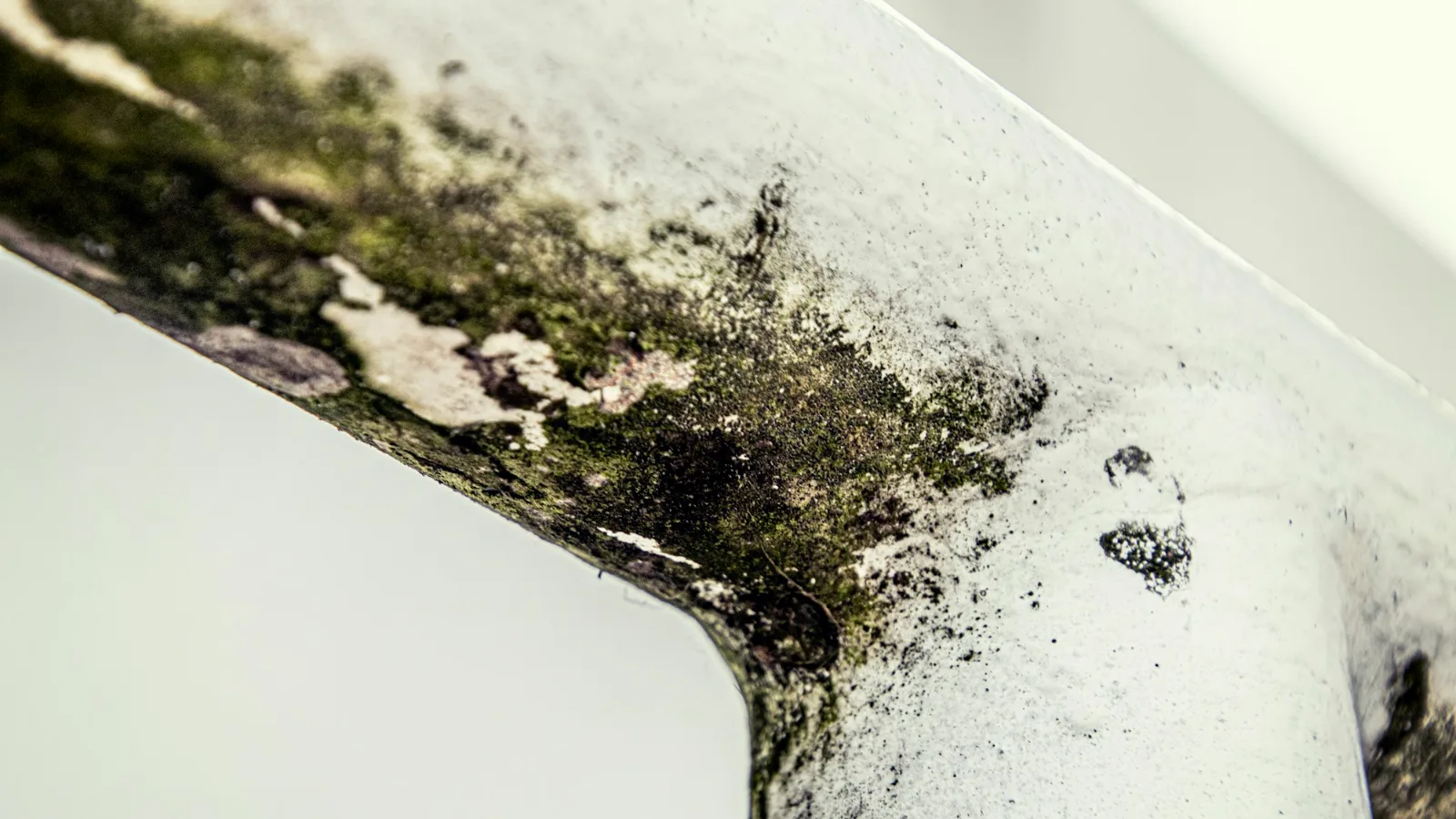
A musty smell in the basement can ruin your week. So can a gray patch creeping out from behind the dresser. Before you call anyone, you want a number, and the cost of mold inspection is easier to pin down than most repair prices.
Most homeowners pay a few hundred dollars. The bill climbs past $1,000 when the house is large, the mold is hidden, or a lab has to analyze several samples. Most of the prices below come from Angi’s 2026 data on thousands of verified jobs, and the mistakes near the end are the ones that make people pay twice.
Key takeaways
- Average inspection runs $689 in 2026
- Most homeowners pay $303 to $1,075
- Visible mold rarely needs lab testing
Table of contents10 sections
How Much Does a Mold Inspection Cost?
Most homeowners pay $303 to $1,075 for a mold inspection, according to Angi’s 2026 cost data, which draws on 7,940 verified projects. The national average is $689. Homes under 4,000 square feet usually run $300 to $400, and larger homes typically cost $700 to $1,000.
Angi prices the common sample types and lab tests on their own lines. Stain and culture tests are charged on top of the fee for collecting the sample.
| Sample or lab test | Typical cost (Angi, 2026) |
|---|---|
| Swab sample from one surface | $200 to $300 |
| Air test | $250 to $350, up to $700 for extensive testing |
| HVAC test | Adds $50 to $75 |
| Stain test at the lab | Additional $150 |
| Culture test at the lab | Extra $50 |
Fixr’s guide, last updated in January 2025, shows a narrower spread. It puts the typical cost of mold inspection at $450 to $800, with most people paying around $500 for a 2,500 square foot home, 2 samples, and lab testing.
What Raises the Cost of Mold Inspection
Home size moves the price most. Fixr calls it the largest factor, and Angi notes that many inspectors bill by the hour, so every extra room adds time to your invoice. Fixr attributes about 60% of an inspector’s fee to labor and the other 40% to tools and testing supplies.
Four other things push the number up:
- Reaching crawl spaces, wall cavities, and ducts takes longer than checking a bathroom wall.
- Opening drywall to look inside a wall can add $16 to $20 per square foot removed, per Fixr.
- Adding samples past the first 2 can cost $60 to $80 each in Fixr’s data.
- Suspecting black mold can bring a premium for the extra protective gear, Angi says.
Time on site follows access. Angi says a basic look at obvious spots can take as little as 2 hours, and a thorough check of hard-to-reach areas can run as long as 6.
Ask how an inspector bills before you book. A flat fee that names the number of samples is far easier to budget than an hourly rate that keeps running as someone crawls under your house with a flashlight and a moisture meter.
When You Need a Mold Inspection vs. Testing
Inspection and testing are two different purchases. An inspection is a trained person looking, with tools like moisture meters and specialized cameras. Testing means collecting air or surface samples and paying a lab to analyze them.
If you can see the mold, lab fees only add to the cost of mold inspection. The EPA’s guidance on mold testing says that in most cases, sampling is unnecessary when growth is visible. No federal limits exist for mold or mold spores, so a lab number can’t tell you whether your home passes a standard.
The CDC does not recommend mold testing at all. Its reasoning is practical. No matter what type of mold is present, you need to remove it.
Book an inspection when any of these apply:
- You smell mold but can’t find it, which EPA lists as a reason to suspect hidden growth.
- You had a leak or flood and need to know how far the water traveled.
- You’re buying a home with water stains in the basement, attic, or ceilings.
Pay for testing when you need proof that a cleanup worked. EPA notes that surface sampling may be useful to determine if an area has been adequately cleaned or remediated. That’s the clearest case where a lab fee buys you something.
What the Inspector Does on the Visit
What are you paying for? Mostly time spent searching. A good inspector walks the whole house, not just the stained wall, and checks the places mold hides. The EPA’s guide to mold and moisture lists the back side of drywall, wallpaper, or paneling, the top of ceiling tiles, and the underside of carpets and pads.
Moisture readings come next, and they matter most. They trace where the water is coming from. EPA warns that if you clean up mold but don’t fix the water problem, the mold will most likely come back.
You’ll get a written report at the end. Angi says working with a pro gets you a detailed report and recommendations for remediation if needed.
You can shorten the visit and trim the cost of mold inspection along with it. Angi suggests clearing furniture and clutter from the areas to be checked, noting any odors or leaks, and opening up access to the attic, basement, and crawl space.
If you’re still deciding whether to book, check the signs of mold in your house first. It covers musty smells, stains, and mold hiding inside walls.
Mold Inspection and Removal Cost When You Find Growth
The cost of mold inspection buys a diagnosis. It doesn’t buy a fix. Angi states plainly that the inspection doesn’t include treatment, so if growth turns up, removal is a separate bill and usually the bigger one.
Angi’s data puts most mold remediation (the cleanup and removal work) at $1,150 to $3,400, and extensive cases can reach $20,000. Fixr combines the two steps and estimates $1,950 to $3,800 for a complete inspection with testing and removal.
Size decides whether you need a pro at all. EPA says that if the moldy area is less than about 10 square feet, roughly a 3 foot by 3 foot patch, you can handle the job yourself in most cases. Past that, or after a lot of water damage, EPA points you to its larger remediation guide.
Our guide to mold remediation cost breaks those prices down by area and square foot.
If you already know there’s growth, you can skip the standalone test and go straight to an estimate. Magnificent Restoration’s mold removal process starts with an inspection and a free, no-obligation estimate, so you see the scope of the job before you agree to any work.
Are DIY Mold Test Kits Worth the Money?
For most homes, no. A kit can show that spores landed in a dish, but EPA says some spores will be found floating in the air and in house dust indoors. The CDC adds that no standard sets an acceptable amount of mold in a home, so a kit result has nothing to measure against.
Fixr’s cost guide calls the reliability of DIY kits questionable. The bigger gap is what a kit can’t do. It can’t find the leak, read the dampness inside a wall, or tell you how far the growth has spread.
A smarter buy is a humidity meter. EPA describes it as a small, inexpensive ($10 to $50) tool sold at many hardware stores, and it recommends keeping indoor humidity below 60 percent, ideally between 30 and 50 percent.
If the meter reads high and you smell mold you can’t see, that’s the point where the cost of mold inspection starts to pay for itself.
5 Mistakes That Make You Pay Twice
Each of these adds to the cost of mold inspection or forces a second visit.
Paying a lab to confirm mold you can see
If it’s on the wall, it has to go. EPA calls sampling unnecessary in most cases where growth is visible, so put that money toward removal.
Scrubbing or painting before the visit
Cleaning the spot hides the evidence an inspector uses to trace the source. Take photos, leave the area as it is, and keep the door closed until the visit.
Booking without asking what the quote covers
Ask how many samples are included, whether lab fees are extra, and when you’ll get the written report. Angi notes that some inspection businesses require a minimum number of samples.
Treating a kit result as an answer
A positive dish doesn’t tell you where the mold is or how much is there. It just sends you to a pro with one more receipt in the drawer.
Removing the mold but not the water
This is the one that repeats. As EPA warns, mold will most likely come back when the water problem stays, and you pay for the whole job again. Learn how long it takes mold to grow after a leak, and book the repair before the cleanup.
How to Choose a Mold Inspector You Can Trust
Rules for mold inspectors depend on your state. New York’s Mold Program, for one, requires a license to advertise or perform mold assessment and remediation work. It bars the same individual from doing both the assessment and the remediation on the same property. Check your own state’s rules before you hire.
Wherever you live, EPA’s standard makes a good filter. It says sampling should be done by professionals with specific experience in designing sampling plans and reading results, and that labs should follow methods from groups like the American Industrial Hygiene Association.
Comparing quotes on the cost of mold inspection only works when each quote covers the same samples. Before you book, ask these questions:
- Which lab analyzes the samples, and which method does it follow?
- How many samples does the quote include, and what does each extra one cost?
- Will the report show moisture readings, photos, and the likely water source?
- Are you licensed where my state requires it, and are you insured?
Magnificent Restoration sends licensed, insured, IICRC-certified teams. IICRC stands for the Institute of Inspection, Cleaning and Restoration Certification, a certification body for restoration work. Live dispatch agents answer 24/7, and the company’s stated average response time is 30 to 60 minutes.
FAQs About the Cost of Mold Inspection
Does homeowners insurance pay for a mold inspection?
It depends on your policy and on what caused the mold. The Insurance Information Institute says standard homeowners policies usually don’t cover mold, which it treats as a home maintenance issue. If the mold is the direct result of a covered peril, such as a burst pipe, the cost of removing it may be covered. Ask your agent whether the cost of mold inspection counts before you book.
Magnificent Restoration provides insurance-friendly documentation and offers direct insurance billing.
How long does a mold inspection take?
A basic inspection can take as little as 2 hours, according to Angi. A thorough check of crawl spaces, ducts, and wall cavities can take as long as 6 hours. Since many inspectors bill by the hour, a longer visit raises the cost of mold inspection, so clear a path to every suspect area before the inspector arrives.
Why does a black mold inspection cost more?
Black mold inspections run $600 to $800 or more in Angi’s 2026 data, which is higher than most other mold types. Some companies charge extra for the protective gear the job requires. You don’t need to name the species before you act. The CDC says that no matter what type of mold is present, you need to remove it.
Do I need a mold test after remediation?
Not always, but it’s the one test with a clear job. EPA says surface sampling may be useful to determine if an area has been adequately cleaned. Its signs of a finished cleanup are simple. The water problem is fixed, the mold is removed, and no visible mold or moldy odor remains.
Is the cost of mold inspection worth it before buying a house?
Often, yes, when the house shows water stains, a musty smell, or warped walls. A few hundred dollars is small next to removal, which Angi puts at $1,150 to $3,400 for most homeowners. Book it inside your inspection window so the findings can shape your offer.
Your Next Step If You Suspect Mold
Start with the water. If the mold is visible and smaller than about 10 square feet, EPA says you can likely clean it yourself. If it’s bigger, hidden, or tied to a leak you can’t trace, the cost of mold inspection is small next to guessing wrong and paying for removal twice.
Magnificent Restoration answers 24/7 and handles the whole path, from inspection and estimate to drying, restoration, and working with your insurer. Get my free estimate online, or call 1-267-736-5729.