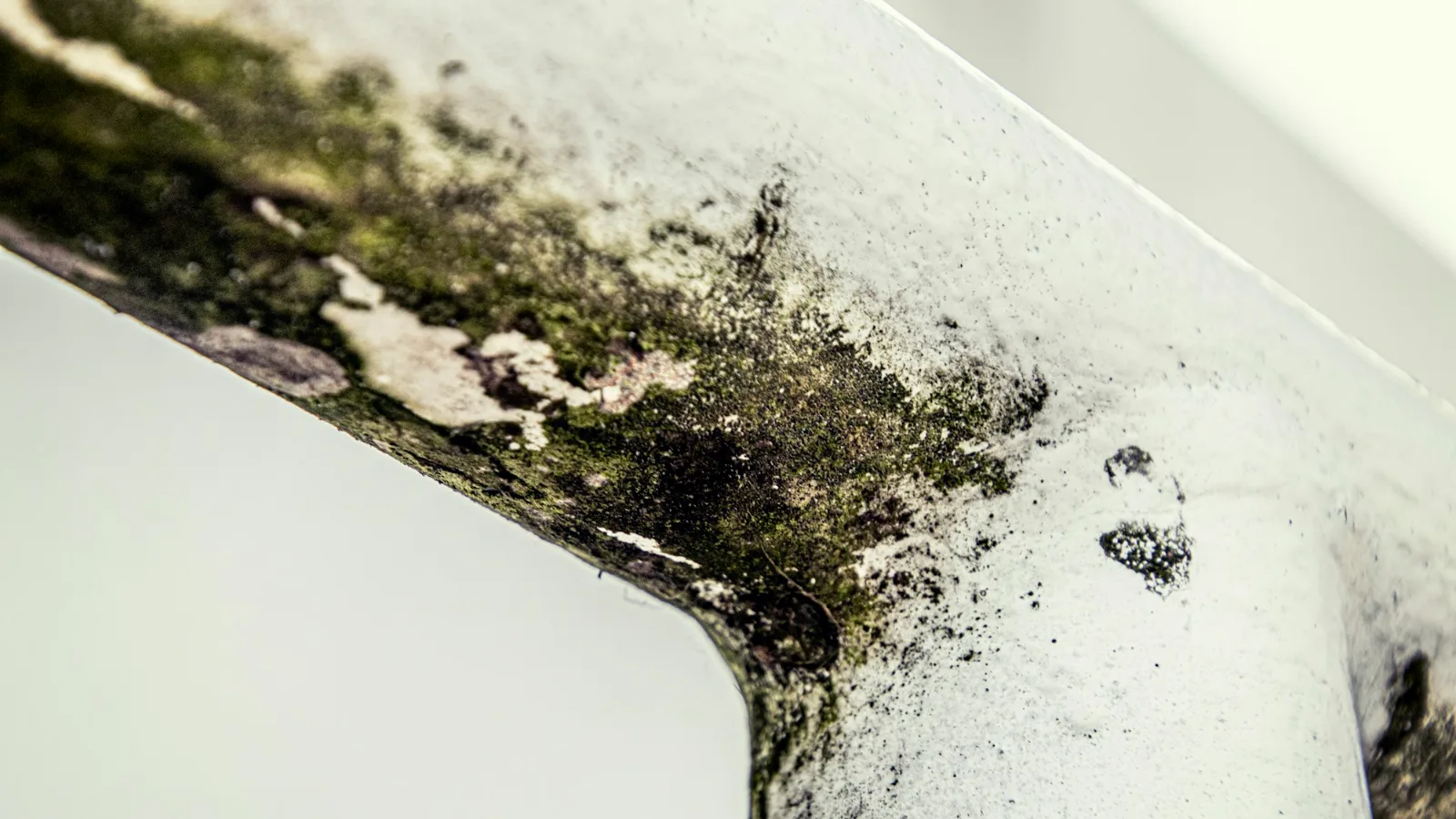

You found mold, and the first thing on your mind is the bill. Ask an insurer "does homeowners insurance cover mold removal" and the reply is nearly always the same. It depends on the cause.
Most policies pay when mold grew from a sudden, covered event like a burst pipe. They say no when it came from a slow leak, a flood, or water nobody dried in time. That leaves three gaps where homeowners end up paying the full bill, and each one is easier to avoid once you know where it sits.
No article can answer "does homeowners insurance cover mold removal" for your exact policy, since every policy reads a little differently. Your policy and your agent have the final word.
Key takeaways
- Sudden burst pipe may be covered
- Slow leaks count as maintenance
- Floods need a separate policy
Table of contents10 sections
When Does Homeowners Insurance Cover Mold Removal?
Homeowners insurance usually pays for mold removal only when a covered peril, meaning a sudden event your policy covers like a burst pipe, directly caused the mold. Mold from slow leaks, humidity, or poor upkeep counts as maintenance, which standard policies don’t cover. Flood mold falls to flood insurance, which FEMA says won’t cover it outside 2 narrow situations.
That’s the view of the Insurance Information Institute (Triple-I), an industry research group. Its guide to protecting your home from mold groups mold with rot and insect damage as a home maintenance issue. When a covered peril such as a burst pipe causes the growth, Triple-I says the cost of eliminating the mold may be covered.
The National Association of Insurance Commissioners (NAIC), the organization run by state insurance regulators, warns in its homeowners insurance guide that homeowners policies often exclude the cost of mold damage.
The stakes are real. From 2019 to 2023, homeowners claims for water damage and freezing averaged $15,400 each, based on ISO data published by Triple-I. That category includes mold damage when the policy covers it.
Slow Leaks Count as Maintenance, Not Accidents
Slow leaks are the first gap. Triple-I’s plain-language guide to the HO-3 policy, a standard homeowners form, says the HO-3 covers you for accidental discharge of water from a plumbing system. The same guide says water seepage is excluded and treated as a maintenance issue.
So the speed of the leak matters more than the size of the mess. A supply line that bursts behind the washer is a sudden event, and a toilet seal that leaked into the subfloor for 6 months is the kind of slow damage policies treat as upkeep.
| What happened | How a policy tends to treat it |
|---|---|
| A pipe bursts inside a wall | Accidental discharge, the kind the HO-3 covers |
| A drain drips under the sink for months | Seepage, treated as maintenance |
| Rain seeps through basement walls | Flood or seepage, outside a standard policy |
| A bathroom stays humid with no fan | Upkeep, not a covered event |
This split shapes the answer to "does homeowners insurance cover mold removal" before an adjuster ever visits. Slow leaks hide, so by the time you see a stain or smell something musty, the water may have been there for months. Knowing the early signs of mold in a house gives you a head start on the damage and the paperwork.
Water claims follow the same rules, and our guide to how homeowners insurance handles water damage covers burst pipes and plumbing leaks in more depth.
Does Insurance Cover Mold Damage After a Flood?
Not under a homeowners policy. Flooding is excluded from typical homeowners coverage, and the federal flood program says its policies won’t cover mold damage either, outside 2 narrow exceptions. If floodwater reached your home, plan on paying for mold cleanup yourself and drying fast enough to keep the growth small.
Floods are the second gap. NAIC’s guide says floods aren’t covered by a typical homeowners policy, and that includes flood damage from groundwater, rain runoff, and snowmelt. That can leave basement mold as an out-of-pocket job.
Flood coverage comes from the National Flood Insurance Program (NFIP) or private insurers. FEMA runs the NFIP. Its answer on mold claims is blunt, saying NFIP policies "will not cover damage from mold," and it lists only 2 situations where it may make considerations:
- An authorized official has banned entrance to the area for safety reasons
- Floodwaters remain around the home and keep you from inspecting or maintaining it
If you can reach the property, FEMA strongly encourages you to begin cleanup and documentation immediately after a flood. That advice protects the house and the paper trail at once.
Waiting Turns a Covered Leak Into Your Bill
Delay is the third gap. A burst pipe can start as a covered event and still end as a denied mold claim if the water sits for days.
Your policy expects you to limit the damage. Triple-I’s advice on settling insurance claims tells policyholders to take reasonable steps to protect their property from further damage. Mold that spreads for weeks after you found the water is hard to tie back to the original sudden event.
The clock is short. EPA’s guide to mold, moisture, and your home says to dry water-damaged areas and items within 24 to 48 hours to prevent mold growth. That window starts when the water appears, not when you notice a musty smell a week later.
Waiting can flip the answer to "does homeowners insurance cover mold removal" from yes to no. When that happens, the whole bill is yours, and our mold remediation cost guide breaks down what drives that price, from the size of the area to where the growth sits.
Mold Damage Insurance Endorsements Worth Asking About
You can close part of the gap before anything goes wrong. NAIC’s explainer on riders and endorsements notes that many home insurance policies exclude coverage for mold or sump pump overflow, and that an endorsement could give you that added protection.
An endorsement, sometimes called a rider, is an amendment that changes your policy’s original terms. NAIC says it may affect your premium, so get the price in writing before you sign.
If your agent’s answer to "does homeowners insurance cover mold removal" is a flat no, an endorsement is the fix to ask about. Bring these questions to the call:
- Does my policy exclude mold or fungi, and on which page?
- If a covered leak causes mold, is removal paid in full or capped?
- Is there a separate dollar limit for mold damage, and how much is it?
- Can I add mold or sump pump overflow coverage, and what does it cost?
- How soon after water damage do you need to hear from me?
Write the answers down with the date and the agent’s name. If a claim ever goes sideways, that note carries more weight than memory.
Will Renters Insurance Cover Mold Damage?
Renters insurance can cover your belongings when a covered event, like a burst pipe, damages them, but it won’t pay to remove mold from the building itself. The walls, floors, and ceilings belong to your landlord, and so does the job of fixing them. Read your policy’s exclusions for mold before you file.
Triple-I’s overview of renters insurance says a renters policy doesn’t include coverage for the building, since the landlord owns that. Your belongings are what it protects, against perils the policy lists. Water is one of them.
If you rent and searched "does homeowners insurance cover mold removal," the answer sits in two places. Your landlord’s insurance handles the building. Yours handles the couch, the clothes, and the laptop.
Report mold to your landlord in writing, with photos and the date you found it. If the water or the mold ruined your things, call your own insurer the same day, and keep the damaged items until an adjuster has seen them. Check your lease and your state’s tenant rules for how fast repairs must happen.
How to Protect Your Claim From Day One
The first hour shapes the whole claim. Work through these steps in order:
- Stop the water at its source, or shut off the main valve.
- Photograph or video the damage before you move or clean anything.
- Call your agent or insurance company the same day you find it.
- Take reasonable steps to stop further damage, and save every receipt.
- Hold off on permanent repairs until the adjuster has assessed the damage.
Steps 2 to 5 follow Triple-I’s claim advice, which says not to throw out damaged items until the adjuster has visited. Triple-I notes that most policies require claims to be filed within one year from the date of the disaster.
Don’t read that as breathing room. Your adjuster answers "does homeowners insurance cover mold removal" for your house based on what you can show, and a clear record of dates, photos, moisture readings, and receipts makes that call easier.
Where an IICRC-Certified Crew Fits In
Small patches can be a weekend job. EPA says that if the moldy area is less than about 10 square feet, roughly a 3 by 3 foot patch, you can handle the job yourself in most cases.
Bigger areas and hidden growth inside walls call for trained hands, and EPA says to call in a professional experienced with contaminated water whenever sewage or other dirty water caused the damage.
Magnificent Restoration sends licensed, insured mold removal crews certified by the IICRC (the Institute of Inspection, Cleaning and Restoration Certification, a certification body for restoration work). Live dispatch agents answer 24/7, and the company’s stated average response time is 30 to 60 minutes.
Every job follows the same path, from your call to an inspection and estimate, then mitigation and drying, then restoration and the insurance paperwork. The team provides insurance-friendly documentation, and direct insurance billing is available.
Your policy still decides what’s covered. What a crew can do is document the source, the moisture readings, and the drying, so your adjuster decides from facts instead of guesses.
Does Homeowners Insurance Cover Mold Removal? FAQs
Does homeowners insurance cover mold removal after a roof leak?
It depends on how the roof failed. NAIC says water damage from a leak in your roof is typically covered, so mold from a sudden storm leak may fall under that claim. A roof that dripped for months through worn flashing reads as maintenance, which Triple-I says standard policies don’t cover. Report the leak the day you find it.
Does homeowners insurance cover mold removal if I never saw the leak?
Possibly. Insurers look at whether the water came from a sudden, accidental discharge or from seepage over time. A pipe that split inside a wall fits the first case, and a slow drip that soaked the subfloor for a year fits the second, which Triple-I treats as maintenance. Ask your adjuster which one your damage shows, and get the source documented.
Does homeowners insurance cover mold removal in a basement?
Usually only when a covered event, like a burst pipe, caused the water. NAIC says flood damage from groundwater, rain runoff, and snowmelt isn’t covered by a homeowners policy, and many policies exclude sump pump overflow without an endorsement. Basement mold from water seeping through the walls usually falls outside a standard policy.
How long do I have to file a mold claim?
Call your insurer the day you find the damage. Triple-I says most policies require claims within one year of the disaster, but your own policy sets the real deadline, so read its conditions section. Waiting rarely helps. Mold keeps spreading, and EPA’s drying window is only 24 to 48 hours.
Get Your Mold Claim Moving Today
Mold claims reward speed and clear records. The answer to "does homeowners insurance cover mold removal" for your home starts with the cause, so get the source found and documented before the growth spreads. Magnificent Restoration offers a free, no-obligation estimate and works directly with insurers. Get my free estimate or call 1-267-736-5729, 24/7.