You open the hall closet and smell something stale. A week later, a faint brown ring shows up on the bathroom ceiling. Neither one proves you have mold, but both rank among the most common signs of mold in house walls, floors, and air.
Mold doesn’t need much to get going. It grows wherever moisture sits, and the CDC’s mold guidance lists paper, cardboard, ceiling tiles, wood, drywall, insulation, and carpet among the materials it grows on.
Check your home for the 9 signs below. Each one tells you what to look for, what it means, and whether you’re facing a weekend cleanup or a job for a pro.
Key takeaways
- Musty smell with no visible source
- Stains, bubbles, or peeling paint
- Fogged windows and sweating pipes
Table of contents10 sections
What Are the Signs of Mold in House Interiors?
The most common signs of mold in house interiors are a musty smell, spots of any color, water stains, peeling paint, warped floors or trim, and condensation on windows or pipes. A leak that stayed wet, mold on stored items, and allergy-type symptoms at home round out the list. Any one of them is worth a closer look.
Use this table as a room-by-room checklist, and start with the signs of mold in house corners you rarely look at.
| Sign | Where to look | What it often means |
|---|---|---|
| Musty, earthy smell | Closets, basements, under sinks | Mold growing nearby, maybe out of sight |
| Spots or fuzzy patches | Grout, window frames, ceilings, walls | Active growth on a damp surface |
| Water stains | Ceilings, walls near tubs and pipes | A leak that may still be wet inside |
| Peeling or bubbling paint | Bathroom walls, outside walls | Moisture pushing out from behind |
| Warped floors or soft trim | Baseboards, laminate, subfloors | Water that soaked in and stayed |
| Condensation | Windows, cold pipes, outside walls | Indoor humidity running high |
| A leak that stayed wet | Anywhere water sat past 48 hours | The conditions mold needs to start |
| Mold on stored items | Boxes, books, shoes, fabric | A damp storage area |
| Allergy-type symptoms | Sneezing, stuffy nose, itchy eyes | A reason to check for moisture |
Signs You Can See on Surfaces
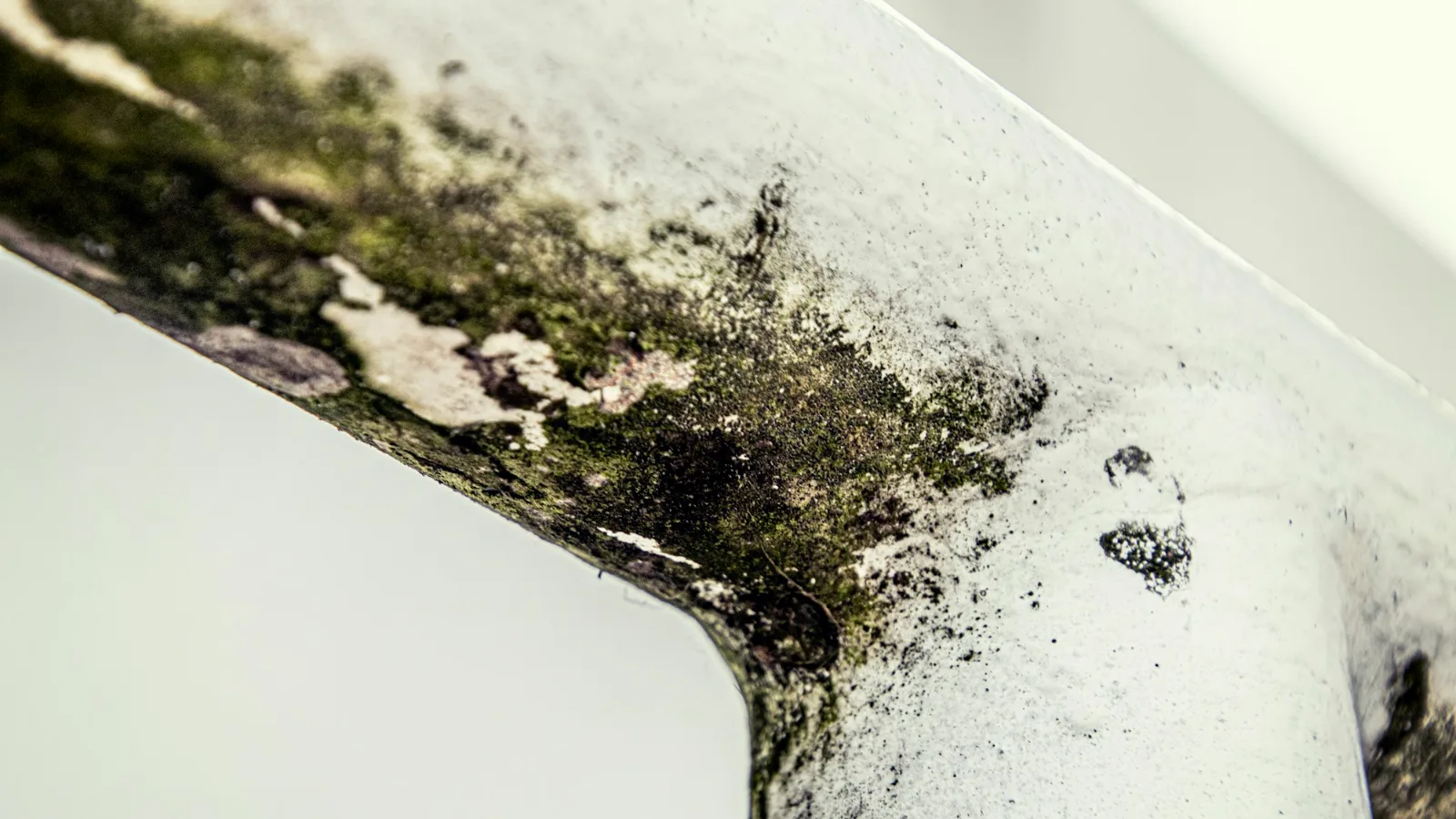
Color tells you less than you’d think. The CDC says mold can look like spots of many different colors, so black, green, white, and gray patches all count. Some look fuzzy. Others look like dirt that comes back a week after you scrub it.
Stains come next, and they’re among the most common signs of mold in house ceilings. A yellow or brown ring on a ceiling means water got in from a roof, a tub, or a pipe above, and the drywall behind it may still be wet.
Paint gives you clues too. Bubbles, cracks, and peeling patches on a bathroom wall often mean moisture is pushing out from behind. The EPA’s guide to mold and moisture says not to paint or caulk moldy surfaces, since paint applied over mold is likely to peel.
Floors and trim round out the visible signs. Look for:
- Laminate or hardwood that cups, buckles, or lifts at the seams
- Baseboards that feel soft or swollen near tubs and toilets
- Carpet that stays damp or smells sour days after a spill
- Dark spots on grout or caulk that come back after cleaning
- Boxes, books, or shoes in storage with fuzzy or spotted patches
What a Mold Smell Tells You
Your nose often finds mold before your eyes do. Some molds release gases called microbial volatile organic compounds, or mVOCs, into the air. The EPA explains that mVOCs often have strong or unpleasant odors and can be the source of the musty smell people link to mold.
A mold smell is usually earthy and stale, a lot like wet cardboard or an old basement. Don’t cover it with a candle and move on. The EPA says a moldy odor suggests mold is growing in the building and should be investigated.
A smell with no visible source is one of the clearest signs of mold in house closets, ceilings, or ducts. The EPA lists that exact pattern, a building that smells moldy where you can’t see the source, as a reason to suspect hidden mold.
Track it before you clean anything. Note where the smell is strongest, whether it gets worse after rain or a hot shower, and whether it fades when the air conditioner runs. Those patterns point you toward the moisture source.
How to Tell if You Have Mold in Your Walls
You can’t see through drywall, so you read the clues around it. The EPA names the back side of drywall, wallpaper, and paneling as common hiding spots for mold. It adds the inside of walls around leaking or sweating pipes, and the wall surface behind furniture, where condensation forms.
Check the wall for these clues:
- A musty smell near one wall, outlet, or baseboard that you can’t trace
- Stains, bubbling paint, or loose wallpaper on that same stretch
- Drywall that feels soft or damp, or crumbles when you press it
- Baseboards that swell, split, or pull away from the wall
- A known leak behind it, such as a shower valve, supply line, or roof
A pin-type moisture meter from a hardware store can show whether drywall is damp without cutting into it. If two or more of these signs of mold in house walls line up, treat it as a real lead.
Think twice before you start cutting. The EPA warns that peeling off wallpaper can lead to a massive release of spores if mold is growing on its underside. If you believe you have a hidden mold problem, the EPA suggests hiring an experienced professional.
Where the Moisture Comes From
Why does mold show up in one room and not the next? Water. The CDC says mold grows where there’s moisture, around leaks in roofs, windows, or pipes, and anywhere that has flooded.
Timing decides a lot. The EPA says that if wet materials dry within 24 to 48 hours after a leak or spill, in most cases mold will not grow. Past that window, a soaked carpet pad or wet wall cavity gives mold the time it needs, and this guide on how long it takes for mold to grow walks through that timeline.
Humidity is the quiet cause. The EPA advises keeping indoor humidity below 60 percent, ideally between 30 and 50 percent, and it calls condensation on windows, walls, or pipes a sign of high humidity. A humidity meter costs about $10 to $50 at many hardware stores, per the EPA, and an air conditioner or dehumidifier brings the number down.
That’s why most signs of mold in house basements and bathrooms cluster near water. Basements get both problems at once, with seepage through the walls and cool surfaces that pull water from the air. If yours took on water, these basement flood cleanup steps cover drying it out before mold sets in.
Is Black Mold Dangerous?
Black mold may cause health symptoms, and so can other indoor molds. The CDC’s facts on Stachybotrys say all molds should be treated the same with respect to potential health risks and removal. You don’t need to know the type growing in your home. If you see or smell mold, remove it, whatever its color.
When people say black mold, they usually mean Stachybotrys chartarum, which the CDC describes as a greenish-black mold that grows on materials high in cellulose, like gypsum board, fiberboard, and paper. It needs constant moisture to grow.
For mold in general, the CDC lists these possible effects:
- Some people get a stuffy nose, sore throat, coughing or wheezing, burning eyes, or skin rash
- People with asthma or mold allergies may have severe reactions
- People with weakened immune systems or chronic lung disease may get lung infections from mold
And don’t expect a lab test to settle the question for you. The CDC says no test exists that proves a link between Stachybotrys and particular health symptoms. If you have health concerns, the EPA advises talking with a health professional before you start cleanup.
Get Rid of Musty Smell in House Air
Sprays and candles hide the smell for an afternoon. It comes back until the mold is gone and the area stays dry. Work through these steps in order:
- Fix the water source first, from a dripping sink trap to a roof leak.
- Scrub mold off hard surfaces with detergent and water, then dry them completely.
- Plan to replace moldy ceiling tiles and carpet, which the EPA says may have to go.
- Dry the area with fans and a dehumidifier until indoor humidity sits between 30 and 50 percent.
- Run kitchen and bathroom exhaust fans that vent outside when you cook, shower, or run the dishwasher.
Go easy on bleach. If you do use it, the CDC says to mix no more than 1 cup of household laundry bleach in 1 gallon of water. Never mix it with ammonia or other cleaners, since that makes a poisonous gas. Open windows and wear rubber gloves and goggles.
A smell that outlasts all five steps usually means the source is hidden in a wall, under a floor, or in the ductwork. At that point, the signs of mold in house air are telling you the problem is bigger than a surface wipe.
When to Call a Mold Pro
Size sets the first line. The EPA says that if the moldy area is less than about 10 square feet, roughly a 3-foot by 3-foot patch, you can handle the job yourself in most cases. Bring in a pro when:
- The mold covers more than about 10 square feet
- Sewage or other dirty water caused the damage
- You suspect mold in your heating or cooling system, which the EPA says not to run
- The smell persists and you can’t find the source
- You see signs of mold in house attics or crawl spaces you can’t reach safely
An inspection helps most when the source is hidden, and this breakdown of the cost of a mold inspection shows what to budget before you book one.
For jobs past the DIY line, Magnificent Restoration’s licensed, insured, IICRC-certified mold removal teams take calls 24/7 through live dispatch agents, with a stated average response of 30 to 60 minutes. IICRC stands for the Institute of Inspection, Cleaning and Restoration Certification.
The estimate is free with no obligation, and the team provides insurance-friendly documentation, with direct insurance billing available. Whether your policy covers mold depends on its wording, so check with your agent.
FAQs About Signs of Mold in House Rooms
Can you have mold in your house without seeing it?
Yes. Mold can grow behind drywall, under carpet pads, above ceiling tiles, and inside ductwork, according to the EPA. The usual clues are a musty smell you can’t trace, or past water damage paired with new health complaints at home. Both are classic signs of mold in house framing and subfloors.
Should you test for mold before cleaning it up?
Usually not. The CDC does not recommend mold testing, and the EPA says sampling is unnecessary in most cases when you can see the mold. Health effects differ from person to person, and the CDC notes there are no set standards for an acceptable amount of mold in a home. Put the money toward removal and fixing the moisture.
Does bleach kill mold on walls?
Bleach can kill surface mold, but killing it isn’t enough. The EPA says dead mold may still cause allergic reactions in some people, so it has to be removed, and it doesn’t recommend bleach as a routine part of cleanup. Drywall is porous, like the ceiling tiles and carpet the EPA says may have to be thrown away, so moldy drywall often gets cut out and replaced.
Should you turn off the HVAC if you see signs of mold in house vents?
Turn it off if you know or suspect the system has mold in it. The EPA says not to run the heating, ventilation, and air conditioning system in that case, since it could spread mold throughout the building. Have the system checked before you use it again.
How soon can mold grow after a leak?
The first two days matter most. The EPA says wet materials dried within 24 to 48 hours after a leak or spill will not grow mold in most cases. If you miss that window, keep drying and watch the area for a musty smell, new stains, or spots in the weeks after.
Get Your Home Checked Before Mold Spreads
Every sign on this list points back to water. If you’ve spotted two or more signs of mold in house rooms, or a smell you can’t trace, a trained crew can find the source before a small patch becomes a big job. Get my free mold estimate online, or call 1-267-736-5729 any time, day or night.